
Inside Tehran
Daily life under bombardment, through the eyes of those living it.

In the second part of my series bringing voices from inside Iran to Western audiences (the first part is here), I speak with two Iranians - Hassan and Sara - who are living in the country as it faces ongoing U.S. and Israeli bombardment. Western coverage of Iran rarely includes firsthand voices from inside the country; this series aims to help fill that gap.
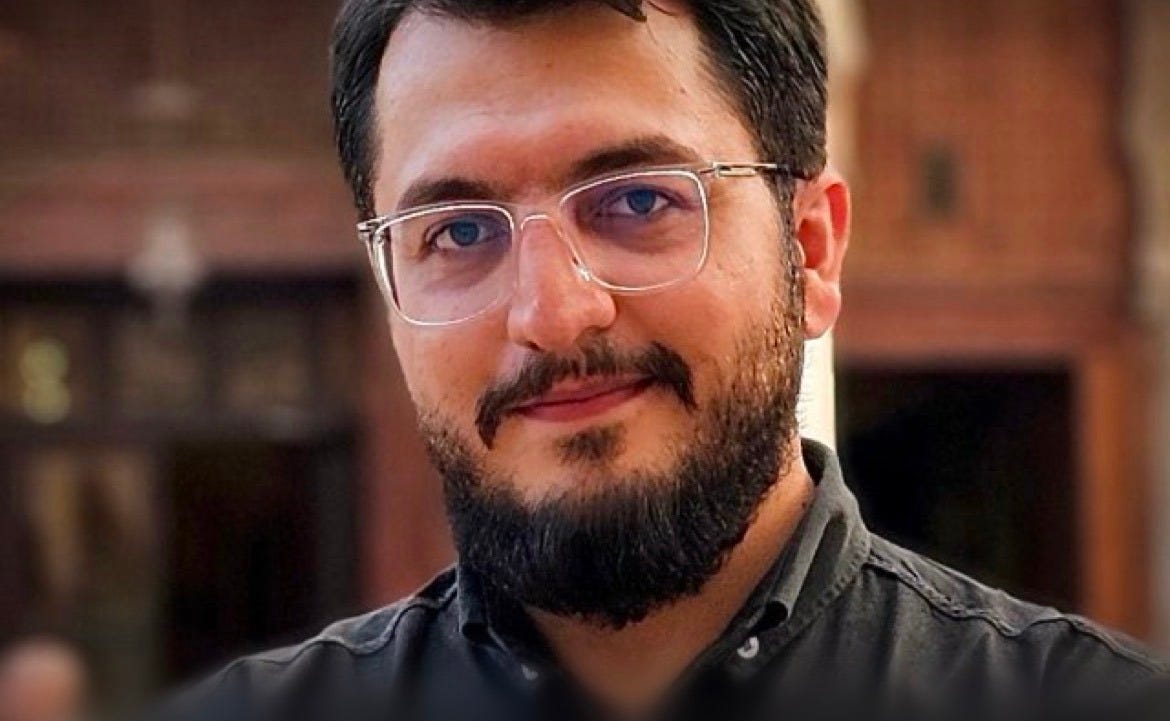
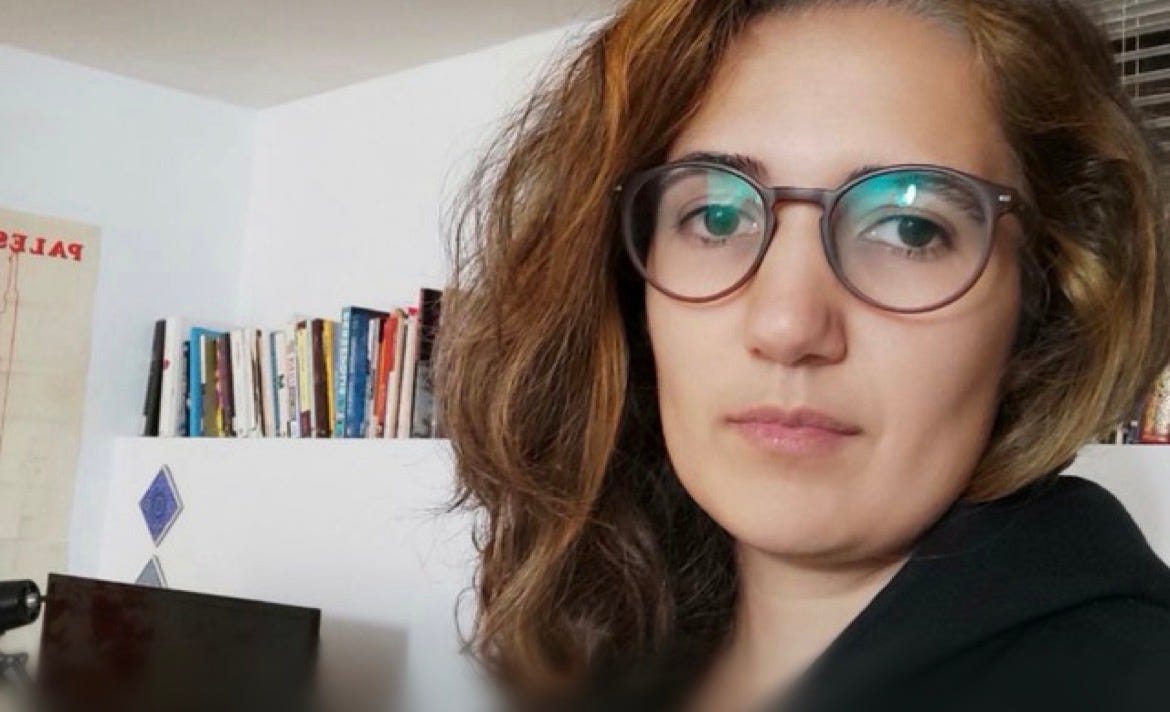
Hassan is an art director who works in the international affairs office of a cultural organization in Tehran and helps build connections between Iranian and Latin American artists. Sara Sagaii is an Iranian-Canadian media studies graduate who shares updates with her audience on Instagram (@sarasg2006) as and when she is able to access the internet. Both describe the realities of daily life during wartime, their feelings towards the Iranian government and gaps in perception vs reality.
We begin with Hassan’s account of daily life inside Iran, where despite ongoing airstrikes and sporadic internet access, many routines persist in ways that may challenge common assumptions. These interviews were conducted during the second week of the war.
Hassan, art director, Tehran
“I live in Qom and work at a cultural organization in Tehran. In particular, the heavy traffic that Tehran is usually known for is no longer there. People are still present and going about their daily lives, but office work and private companies have been limited because of the war and also because of internet restrictions. At the same time, shops, services, and similar businesses are operating as usual, and there is no sign of famine or shortages of goods in the country.
During these days of war, I have taken relatives’ cars to the car wash twice — once to remove the effects of acid rain caused by attacks on Tehran’s oil storage facilities - and even there the car washes were busy and functioning as before. At night, in many cities, supporters of the system gather in large and energetic numbers in different parts of the city. I have seen this myself in both Tehran and Qom — in order to prevent any slide toward civil war.
A gap between diaspora and domestic sentiment
I think the overwhelming majority of Iranians oppose an attack on their country. Even if they themselves are critical of the government, they do not want a bully to assassinate their leader — something unprecedented in the past several decades. My greatest concern is that my family could be harmed by U.S. and Israeli attacks, or that my country could lose its infrastructure — something that would be very difficult to rebuild under any political system.
It is natural that supporters of the system are more concentrated inside Iran, because they want to build their lives there and are working there; and conversely, opponents of the system are more concentrated outside Iran, because they do not see it as a place they want to live. So it is obvious that the balance of pro and anti-system sentiment visible in the West — especially in Canada — is very different from the balance among Iranians living inside Iran. Iran has a population of 90 million and is a country of immense ethnic, religious, and political diversity, as well as different tastes and outlooks. So it is not possible to say that “everyone wants regime change” or that “everyone supports the regime.”
On protest and political divisions
The divide among people over the January protests is very deep. Almost everyone is extremely dissatisfied with the economic situation, but they disagree strongly over how to protest it. One group believes that regime change, and alignment with the son of the former dictator, is the way to improve conditions. Another group emphasizes economic reforms within the current system. Both of these groups are minorities. The majority of people simply want economic conditions to improve.
The system also has a hard core of supporters who are steadfastly willing to sacrifice their lives for the current system. They are the same people who are out in the streets [in anti-war/pro-government rallies] every night. Their afterlife-oriented ideology means that material life is not their highest priority.
But there are also several million people who are firmly opposed to the current regime. They are waiting for the bombing to bring about the collapse of the system so that they can bring Reza Pahlavi to power. If the system is able to endure — and so far Iran has not projected weakness — people will lose hope in those kinds of strategies. In fact, Reza Pahlavi’s refusal to take responsibility after encouraging young people during the January protests reduced his popularity, even among some of his own supporters.
Overall, the war has led to greater solidarity between pro-system Iranians and ordinary people, although opponents of the system have their own narrative of the war: that only the Islamic Republic is being targeted, not the people. But the evidence on the ground suggests otherwise. Many hospitals, schools, and homes have already been destroyed.
On state response
In my opinion, the government’s biggest mistake has been that it has not created an adequate space for public protest, and the security-based response to protests has only intensified them. The infiltration of Mossad and CIA-linked elements among the protesters is obvious to many, but that should not become an excuse for a harsh response to protests. If people see that protest can lead to real improvement, they will be less likely to think in radical terms.
Protests, in any case, make the government understand that it cannot move forward without taking public opinion into account. In my view, if the government can get through this war, especially under the new leadership, there may be more room for convergence with the people. I hope so, because I see the danger of Israeli influence and of Reza Pahlavi’s rise as even greater. Israel does not tolerate a large, independent, and non-dependent entity near itself, and to remove that risk it seeks to fragment Iran. So in my view, it would not even allow Reza Pahlavi to build an independent, unified, and powerful country that could become a threat to it.
Iran as a ‘backward’ country
When I put myself in the place of people in Canada, the United States, or Europe, it is understandable that they might think all Iranians are living under the oppression of the regime, and that Iran is a backward, weak, underdeveloped country ruled by a totalitarian and oligarchic dictatorship. But for people inside Iran, it is clear that this is not the whole picture.
Iran holds a major election almost every year — presidential elections, parliamentary elections, city and village council elections, and elections for the Assembly of Experts. It has a large state apparatus employing millions of people, with career structures that extend upward through a broad bureaucracy. In my view, what many outsiders do not understand about Iran and Iranians is a deeply rooted historical sense of identity and independence that unites Iranians around their Iranian identity.
They are people who tend to become more united in times of war and danger rather than fleeing. During Friday’s demonstrations, senior officials and ordinary people in Tehran witnessed explosions; but instead of panic and chaos, they chanted in unison and became more united. Iranians are Muslims, and however much they may criticize or protest their political system, they are believers in God. Affection for Israel has almost no place among Iranians and has a very limited social base. In fact, what I have seen over 30 years of my life is very different from the number of likes and views on Instagram.”
Sarah Sagaii, media studies graduate, Tehran
“There are bombings every day.
When you hear the fighter jets arriving, you hear their roar, and you know that there’s going to be some kind of bomb dropped pretty soon. Unlike Israelis, we don’t get those alarms that tell you to go to shelters… we don’t have designated shelters like that. We’re a normal city, not, not a city that is constantly envisioning war.
I was trying to have some kind of protocol for myself, because I live alone…so I started preparing for a war situation. One part of that was taping the windows. In aerial bombardments, the most vulnerable part of the house are glass windows. It’s recommended to reinforce them by taping them. I went to the closest store to buy packing tape to do this, but they were all out because everyone was buying the same thing. I also prepared an emergency kit of sorts where I would have some things ready in a bag by the door, ready to go, like dry food, a bottle of water, cash, keys, identification documents.
Two things happened after that first week of war. The first was that my next door neighbors left for the north, like so many others. They messaged me in the morning, and said: ‘Just so you know, we’re not there anymore; we’ve left the city.’ And I just felt my stomach drop - not in a very unexpected way because it wasn’t like I was dependent on them or anything, but just some kind of a fear settled in. It just suddenly felt too scary to go through alone. There was now just me and one other neighbor in the whole building.
I ended up leaving and going to live with my grandmother in the city. She refuses to leave. She keeps saying: ‘My home is here. My kids are here’.
The second thing that happened was that I got internet access through a VPN. I had been talking to a friend about creating some just very personal videos, to document what’s happening and posting them online. I had no expectations. So I posted one video, and it just went viral like crazy. And I really, really did not expect that, but later I learned that because there is such a gap in hearing from people inside Iran. That’s why there’s been a reaction.
On public opinion
There are two extremes of people here, and the majority of the people are in between those extremes, the two extremes are. One extreme are the hardcore pro government people whose main source of information is the IRIB, which is the Iranian Republic of Iran Broadcast. And then there’s the opposite end of the spectrum, who are the hardcore anti government people, who just swear by Iran International like it’s their Bible. [Iran International was once funded by a firm with ties to Saudi Arabia’s Prince Mohammad bin Salman].
They don’t know what state TV is saying and they don’t care. They’re not even aware of what is being said in the US. So these two worlds essentially do not overlap. I would say most people are floating in between these two extremes now, especially now that the internet is shut down.”